Altitude Sickness in Cusco: How to Prevent It and Acclimatize
Cusco sits at about 11,000 ft. How to spot altitude sickness, the acclimatization plan we use with our guests, and what the CDC says about prevention.
You land in Cusco after an early flight from Lima, grab your bag, climb the stairs out of the terminal and feel it: a light head, a heart beating a bit too fast for walking. Welcome to around 3,400 m (about 11,000 ft). Altitude sickness in Cusco is the single most common reason our guests have a rough first day, and also one of the most preventable. Here is what we tell every traveler before they arrive, based on CDC guidance and on watching thousands of people adjust to our city.
How high is Cusco, really?
Cusco sits higher than any town in the continental US, and almost everything you will visit is either a little lower or a lot higher:
| Place | Approx. altitude |
|---|---|
| Machu Picchu | 2,430 m (7,970 ft) |
| Sacred Valley (Urubamba, Ollantaytambo) | 2,800–2,900 m (9,200–9,500 ft) |
| Cusco city | 3,400 m (about 11,000 ft) |
| Humantay Lake | 4,200 m (13,780 ft) |
| Rainbow Mountain | About 5,000 m (16,400 ft) |
For comparison, Breckenridge, Colorado, one of the highest ski towns in the US, sits under 3,000 m (about 9,600 ft). Living in Denver helps, but it doesn't make you immune.
What does altitude sickness feel like?
The CDC describes acute mountain sickness (AMS) as a headache plus at least one of: loss of appetite, nausea, dizziness or fatigue. It usually starts 2 to 12 hours after arrival, often during the first night, and tends to fade within 12 to 48 hours if you do not go higher. Poor sleep is common too; you may wake up gasping a little. That alone is normal.
When is it serious?
Two rarer conditions need urgent attention:
- Brain swelling (HACE): confusion, drowsiness, stumbling as if drunk.
- Fluid in the lungs (HAPE): breathlessness even at rest, a persistent cough, sometimes pink or bloody sputum.
Either one means getting medical help and descending. The CDC notes that dropping just 300 m (1,000 ft) often brings quick relief from AMS. On our tours, guides carry a first-aid kit and oxygen, and they will not hesitate to turn a group around.
How to prevent altitude sickness in Cusco: our acclimatization plan
The CDC advises against going from low altitude to a sleeping altitude above about 2,750 m (9,000 ft) in a single day. Flying from Lima straight to Cusco does exactly that. The workaround is simple, and it is the plan we build into most of our itineraries: go down before you go up.
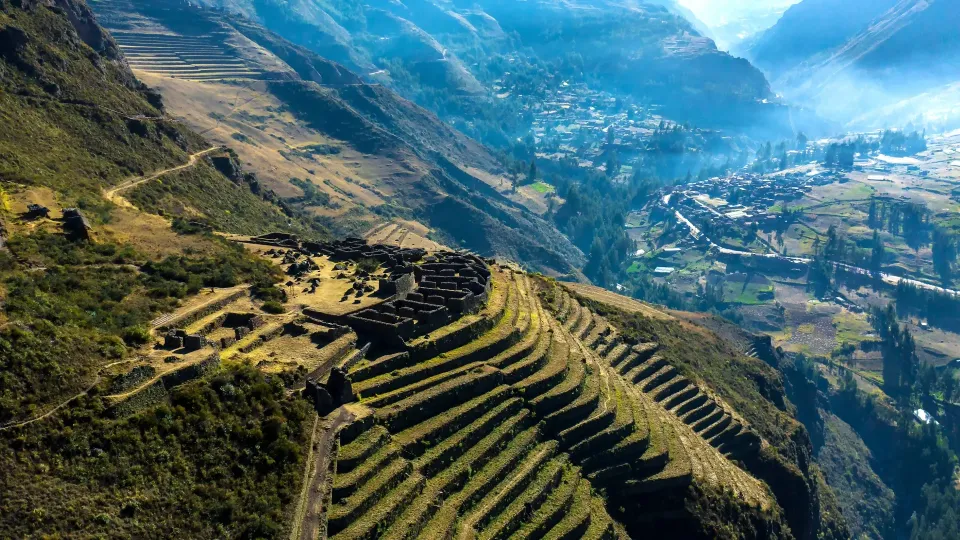
- Day 1: Land in Cusco and drive straight to the Sacred Valley, about 1.5 hours away and roughly 500 m lower. Sleep there.
- Day 2: Gentle sightseeing in the valley: Pisac, Ollantaytambo, the Maras salt pans. Our Sacred Valley Tour is ideal.
- Day 3: Train to Machu Picchu, which is even lower.
- Day 4: Return to Cusco. By now your body has had three days to adapt.
- Day 5 onward: City tour, then high day trips or treks.
Our Sacred Valley & Machu Picchu 3 Days and Cusco, Sacred Valley & Machu Picchu 4 Days follow this order. If your 2-week trip includes Lake Titicaca, our 2-week Peru itinerary shows how to sequence it so you never climb too fast.
Everyday habits that help
- Take it easy for 48 hours. The CDC recommends only mild activity at first. Walk slowly uphill, skip the gym.
- No alcohol for the first two days. Save the pisco sour for later.
- Drink water regularly, but there is no need to force huge amounts; the CDC notes that overhydration has not been shown to prevent AMS.
- Eat light dinners. Heavy, late meals make the first night worse.
- Avoid alcohol and opioids as sleep aids; the CDC warns they can depress breathing at altitude.
Diamox (acetazolamide): should you take it?
Acetazolamide is the medication the CDC recommends for preventing altitude sickness in people at moderate or high risk. It is prescription-only in the US, typically started the day before ascent at a low dose, and its classic side effect is tingling in the fingers and a strange taste in soda. Talk to your doctor or a travel clinic about four to six weeks before you fly, especially if you have heart or lung conditions, are pregnant, or plan a high trek such as Salkantay. We are a tour operator, not doctors, so we never hand out medication.
Does coca tea work?
Mate de coca is everywhere in Cusco: in hotel lobbies, at trailheads, in our campsite tents at 5 a.m. It is legal in Peru, mildly stimulating and comforting on a cold morning. Locals swear by it; scientific evidence that it prevents AMS is thin. Two US-specific notes: the State Department's Peru page advises against consuming coca products, and coca can show up on a workplace drug test. Do not pack leaves or coca candy to take home.
Altitude sickness in Cusco and the rest of your trip
Cusco is rarely the highest point of a Peru vacation. Lake Titicaca sits around 3,800 m (12,500 ft), and the classic day trips, Humantay Lake and Rainbow Mountain, go well above that. The trick is order. Do the lower places first, sleep in Cusco a few nights, then go high on day trips where you come back down to sleep. Treks such as the Inca Trail or Salkantay come last, when your body has had five or six days to adjust. If you are planning the Humantay Lake day trip, put it at the end of your Cusco stay, not the beginning.
A small practical note for US travelers: the jet lag from the East Coast is minimal, since Peru is on the same clock as US Eastern Standard Time, so most of the fatigue you feel on day one really is the altitude.
Who should talk to a doctor first?
Anyone with heart disease, lung disease (including significant asthma or COPD), sickle cell disease, a recent surgery, or pregnancy should get medical advice before booking. If you have had altitude sickness before, you are more likely to get it again, so plan an extra slow start.
One of our office staff, who has lived in Cusco all her life, still drinks a cup of coca tea and takes the stairs slowly after every trip to Lima. That is the right attitude: altitude doesn't care how fit you are.
FAQ
How long does it take to acclimatize to Cusco?
Most people feel mostly normal after one to three days. The CDC puts acute acclimatization at roughly 3 to 5 days.
Is it better to stay in the Sacred Valley first?
Usually yes. Sleeping lower for the first night or two is one of the simplest ways to reduce symptoms, and the CDC mentions it as an option for Cusco.
Can I do Rainbow Mountain on my second day?
We don't recommend it. Wait until you have spent at least two or three nights at altitude, ideally after Machu Picchu.
Do hotels in Cusco have oxygen?
Many mid-range and upscale hotels offer oxygen on request or in rooms. Ask when you book.
Want an itinerary built around a gentle first few days? Send us your dates through our contact page or WhatsApp. And before you pack, check our guide to Peru travel requirements for US citizens.
Sources
Local guides and travel planners based in Cusco. We walk these routes every season.
About UsTours for this trip
Day Tours from Cusco
Sacred Valley Tour from Cusco: Pisac & Ollantaytambo
The Full Day Sacred Valley Tour unfolds like a journey through the cultural heart of the Andes. From the…
- Moderate
- 3,762 m
- Group or private
From US$110per person
Book a trip
Machu Picchu Tours
Sacred Valley & Machu Picchu 3 Days: Maras, Moray & Train
The 3 Day Sacred Valley and Machu Picchu Tour from Cusco is designed for travelers who want a…
- Moderate
- 3,762 m
- Group or private
From US$520per person
Book a trip
Machu Picchu Tours
Cusco, Sacred Valley & Machu Picchu 4 Days
The Sacred Valley and Machu Picchu 4 Day Tour is the ideal experience for travelers who want a complete…
- Moderate
- 3,800 m
- Group or private
From US$740per person
Book a trip Travel Planning
 Travel Planning