
How to Get to Machu Picchu in 2026: Train, Trek or Hidroeléctrica
Train, trek or the budget Hidroeléctrica route? A Cusco operator's honest comparison of every way to reach Machu Picchu in 2026.
If you are trying to figure out how to get to Machu Picchu, start with one fact that shapes every option: there is no road from Cusco to the citadel. Every visitor ends up in the small town of Machu Picchu Pueblo, better known as Aguas Calientes, and from there rides a bus or climbs the last stretch on foot. What you choose is how you reach that town. Train, multi-day trek, or the long budget route through Hidroeléctrica. We send travelers along all three every week from our office in Cusco, so here is how each one really works in 2026.
How to get to Machu Picchu: your three options compared
| Option | Time from Cusco | Effort | Best for |
|---|---|---|---|
| Train from Ollantaytambo | About 1.5–2 h by train, plus the drive to Ollantaytambo | Low | Most travelers, especially with a Sacred Valley stay |
| Train from Cusco (bus + train) | About 3.5–5 h in total | Low | Day trips and tight schedules |
| Trekking (Inca Trail, Salkantay, Lares) | 2 to 5+ days | Moderate to high | Hikers with time and fitness |
| Road via Hidroeléctrica | About 6 h by road, then a 2.5 h walk or short train | Moderate | Budget travelers with flexible time |
Option 1: The train to Machu Picchu
Two companies run passenger trains to Aguas Calientes: PeruRail and Inca Rail. The track follows the Urubamba River from the dry Sacred Valley into a narrow, green canyon. Somewhere past Ollantaytambo the vegetation changes so quickly that you feel the air getting warmer and wetter through the window.
Where do the trains leave from?
Ollantaytambo is the main departure point, and the ride from there takes about 1.5 to 2 hours. From Cusco, PeruRail departs from San Pedro, Wanchaq or Poroy depending on the service and time of year, and both companies also sell "bimodal" tickets: a bus to the valley, then the train. Since September 1, 2025, PeruRail also uses Pachar station, near Ollantaytambo, as a transfer point on selected schedules. Door to door from Cusco, plan on 3.5 to 5 hours.
Which train class should you book?
- PeruRail Expedition: the practical choice, with panoramic windows.
- PeruRail Vistadome: roof windows, a snack and cultural performances on some departures.
- PeruRail Vistadome Observatory: an open observation car at the back and live music.
- Inca Rail The Voyager and The 360°: the 360° adds an open-air observatory car.
- Inca Rail The Prime and First Class: more space, dining service, lounge cars.
- Belmond Hiram Bingham: the luxury option with full dining.
Our honest take: the views are the same from every class. If the budget is tight, the basic classes are perfectly comfortable. If it is a special trip, the observatory cars are worth it for the open-air section through the canyon.
Luggage rules on the train
PeruRail allows one bag or backpack per person of up to 8 kg (17.6 lb), with a combined size of no more than 157 cm (62 in). Leave your big suitcase at your Cusco hotel; most hotels will keep it for you. Inca Rail publishes its own limits, so check before you pack.
Want the train with no planning on your part? Our Machu Picchu full day tour from Cusco includes train, bus, entry and guide, and the Sacred Valley and Machu Picchu 2-day tour adds a night near the ruins.
Option 2: Hiking to Machu Picchu
Walking in is the most memorable way to arrive, and the only way to enter through the Sun Gate. Your choices:
- Classic Inca Trail, 4 days: the famous route, with permits limited and often sold out months ahead. The trail closes every February.
- Short Inca Trail, 2 days: one day of hiking past Wiñay Wayna, a night in Aguas Calientes and the visit the next morning.
- Salkantay Trek, 4 days: high mountain pass, glaciers and cloud forest, with no permit system. You finish by train or on foot into Aguas Calientes.
Unsure which suits you? Our comparison https://machulasjourney.com/blog/inca-trail-vs-salkantay/ lays out the differences, and every route is listed under https://machulasjourney.com/tours/inca-trail/ and https://machulasjourney.com/tours/salkantay-adventure/.
Option 3: The Hidroeléctrica route
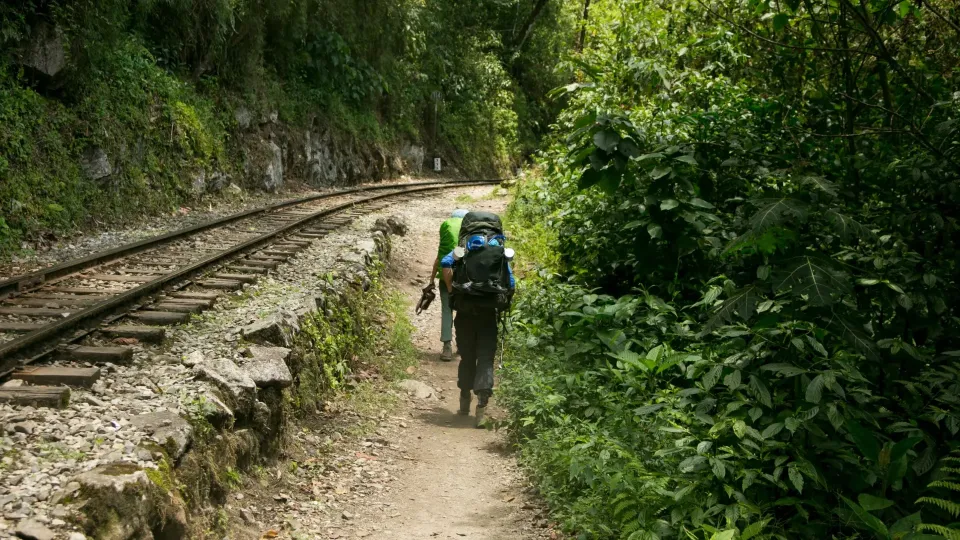
This is the backpacker classic. You travel by road from Cusco through the Abra Málaga pass and down toward Santa Teresa to the Hidroeléctrica station, roughly six hours of curves. From there you either walk about 2.5 hours along the railway tracks or take a short train of about 30 minutes to Aguas Calientes. It is cheaper than the full train and you see a different landscape, but it eats a whole day each way and the mountain road can be tiring. In the rainy season, landslides can close that road.
One of our guides grew up in Santa Teresa and walked the Hidroeléctrica tracks to school as a kid. His advice to guests: start early, carry insect repellent, and do not walk on the rails themselves. Trains do pass.
The last stretch: from Aguas Calientes up to the citadel
From town, buses climb the zigzag Hiram Bingham road to the entrance. You can also walk up from Puente Ruinas on steep stone stairs, which most people find harder than expected.
A note for 2026: the bus service has been in transition. Consettur's 30-year concession ended on September 4, 2025, and the handover sparked protests that temporarily disrupted trains and left more than 4,700 visitors unable to reach the citadel, according to RPP. Since October 2025 a second company, San Antonio de Torontoy, has shared the route, and the Urubamba provincial government launched a tender for new long-term concessions in 2026. Our practical advice: buy bus tickets in town or through your operator, keep some buffer time, and follow updates. More on this in https://machulasjourney.com/blog/machu-picchu-news-2026/.
Which way to get to Machu Picchu suits you?
- Short trip or first time in Peru: train from Ollantaytambo after a night in the Sacred Valley.
- Fit and with four free days: the Inca Trail or Salkantay.
- Tight budget, flexible schedule: Hidroeléctrica, ideally with a night in Aguas Calientes.
However you decide how to get to Machu Picchu, the ticket for the citadel is separate and tied to an entry hour, so build your train time around it. Our https://machulasjourney.com/blog/machu-picchu-circuits-explained/ explains which ticket to buy, and the full https://machulasjourney.com/blog/machu-picchu-travel-guide/ covers timing and where to stay.
FAQ
Can you drive to Machu Picchu?
Not all the way. You can drive to Hidroeléctrica, but the last section to Aguas Calientes is by train or on foot.
How long is the train ride to Machu Picchu?
About 1.5 to 2 hours from Ollantaytambo, or roughly 3.5 to 5 hours from Cusco including the bus connection.
Do I need to book the train in advance?
Yes, especially from June to October. Trains to and from Aguas Calientes fill up, and your ticket time must match your entry hour.
Is the Hidroeléctrica walk safe?
It is a popular, flat walk next to the tracks. Go in daylight, keep off the rails, and check road conditions in the rainy season.
If you would rather have us line up the train, bus and entry for you, write through https://machulasjourney.com/contact-us/ or WhatsApp and tell us your dates.
Sources

Local guides and travel planners based in Cusco. We walk these routes every season.
About UsTours for this trip
Inca Trail to Machu Picchu
Classic Inca Trail 4 Days Group Tour
Classic Inca Trail 4 days group tour is the perfect choice for travelers who want to experience the most…
- Moderate
- 4,650 msnm
- Group or private
From US$950per person
Book a trip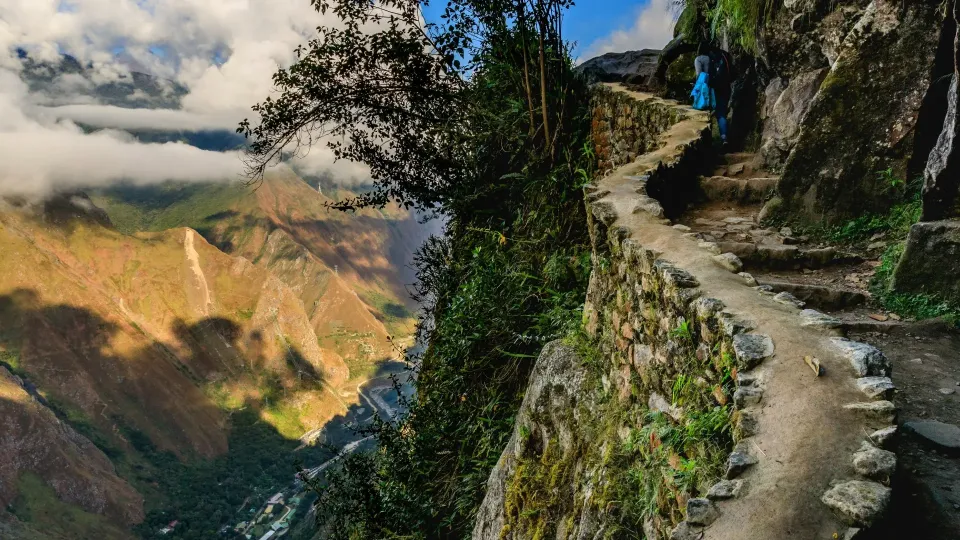
Inca Trail to Machu Picchu
Short Inca Trail to Machu Picchu 2 Days
Short Inca Trail to Machu Picchu 2 days is the perfect adventure for travelers who want to experience…
- Moderate
- 3,600 m.s.n.m
- Group or private
From US$560per person
Book a trip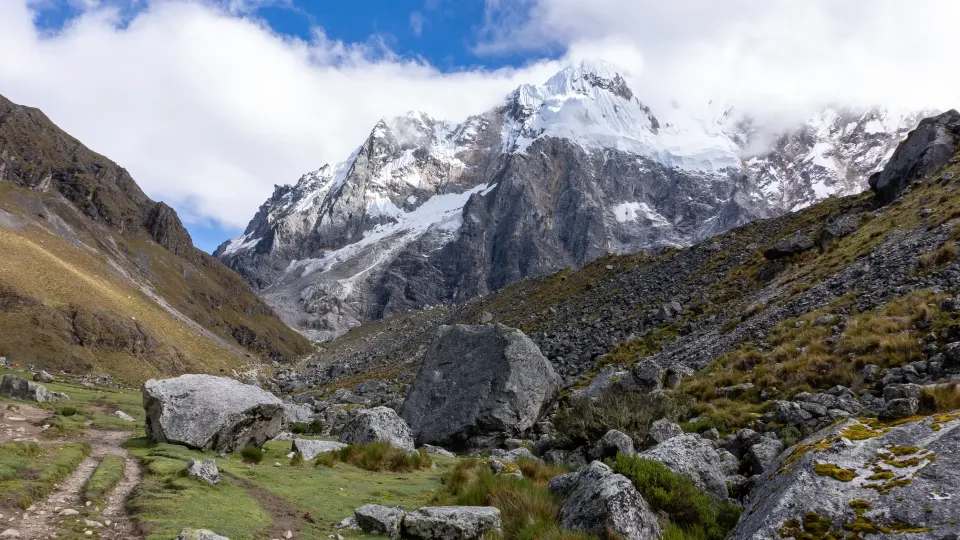
Salkantay Trek
Salkantay Trek 4 Days / 3 Nights
The Salkantay Trek 4 Days / 3 Nights is an unforgettable journey for travelers who want to experience…
- Challenging
- 5,200 m.s.n.m.
- Group or private
From US$750per person
Book a trip Machu Picchu