Sacred Valley Peru Guide: Pisac, Ollantaytambo, Maras, Moray and Chinchero
Pisac, Ollantaytambo, Chinchero, Moray and Maras: how to see the Sacred Valley, how long to stay and why it's the best place to acclimatize.
Drive out of Cusco on the road to Pisac and, about forty minutes in, the bus goes quiet. That's the moment the Urubamba River appears far below, a green ribbon of corn fields and eucalyptus between mountains. The Sacred Valley Peru travelers dream about is a string of Inca towns, terraces and markets along that river, and it's also the smartest place to spend your first nights at altitude. Here's how we, as a Cusco-based team, would plan it for you.
Why the Sacred Valley is worth more than a drive-through
Many itineraries treat the valley as the road to the Machu Picchu train. But the valley sits lower than Cusco — Pisac is at about 2,972 m (9,750 ft) and Ollantaytambo at 2,792 m (9,160 ft), compared with roughly 3,400 m (11,150 ft) in Cusco — so sleeping here first is easier on your body. The climate is milder, the hotels have gardens, and in May the fields are gold with ripening corn.
Sacred Valley Peru: the five places to see
Pisac: market town and mountain citadel
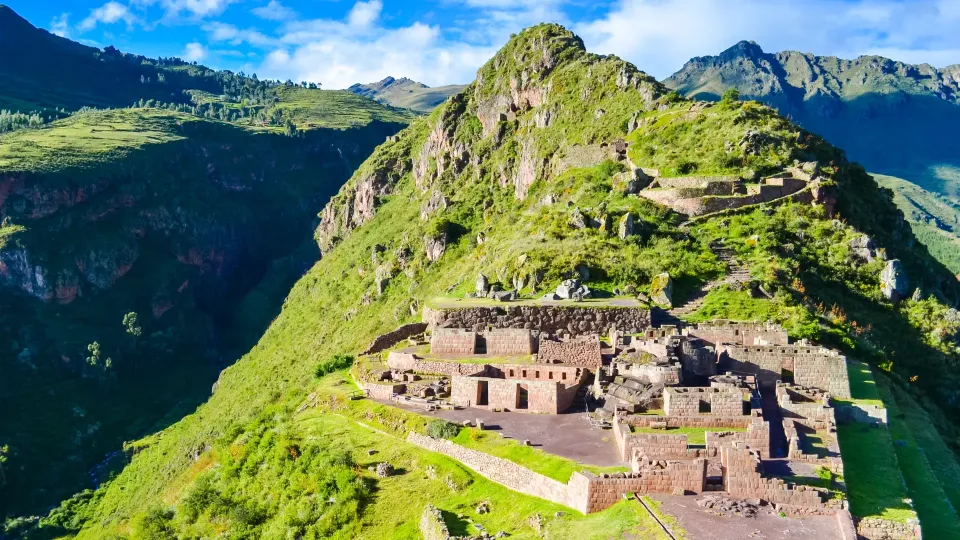
Pisac lies about 32 km (20 miles) from Cusco. The town's market runs on Tuesdays, Thursdays and Sundays, and Sunday is the big one, when Quechua families from the surrounding communities come down to sell produce. Above town, the Inca complex spreads along a ridge with sweeping agricultural terraces, believed to have been built under Pachacuti. Go to the ruins first, early, then come down to the market when the light gets harsh.
Ollantaytambo: the living Inca town
About 72 km (45 miles) from Cusco by road, Ollantaytambo still follows its Inca street grid, with water channels running beside the stone lanes. In 2021 the Andean Parliament recognized it as a "living Inca city." The huge terraces of the so-called fortress were part of a religious complex, and in 1537 Manco Inca defeated a Spanish force on the plain below by flooding it. Ollantaytambo is also where most travelers catch the train to Machu Picchu.
One of our guides grew up a few streets from the main plaza, and he likes to take guests up the opposite hill, Pinkuylluna, to look back at the ruins in the late afternoon, when the shadow of the mountain swallows the town and the swallows start diving over the rooftops.
Chinchero: weavers and a church on Inca foundations
Chinchero sits high on the plateau at around 3,750 m (12,300 ft), roughly 30 km from Cusco. The colonial church was built over the remains of an Inca palace associated with Túpac Inca Yupanqui. Chinchero is best known for its weaving cooperatives, where women demonstrate spinning and natural dyes; our https://machulasjourney.com/blog/ guide explains how to buy well. You'll also hear about the new international airport being built nearby; the Ministry of Transport said in January 2026 that construction was about 40% complete, with operations expected in late 2027 or early 2028 (more in https://machulasjourney.com/blog/).
Moray: the circular terraces
About 50 km (31 miles) northwest of Cusco, just west of the village of Maras, Moray looks like an amphitheater sunk into the earth. The largest depression is around 30 m (98 ft) deep, with concentric terraces. The most common interpretation is that the Inca used the different microclimates between top and bottom for agricultural experiments. Stand at the rim on a windy afternoon and then walk down: you'll feel the air warm up.
Maras salt mines
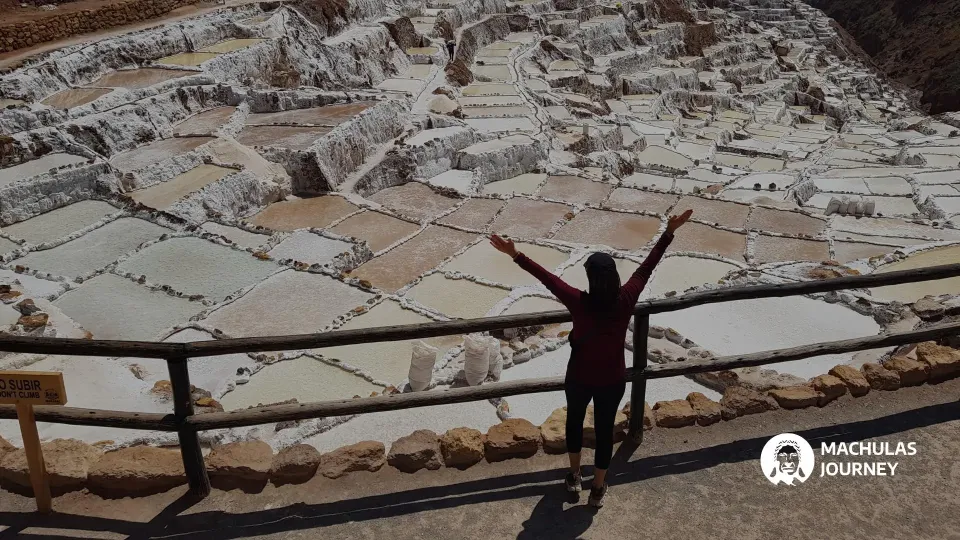
A cascade of white and ochre salt pans pours down a ravine, fed by a salty spring. They're worked by local families. Since 2019 visitors can no longer walk among the pans; the visit ends at a viewpoint, a rule introduced for hygiene reasons. The salt mines charge their own entrance, which is not part of the Boleto Turístico.
Which Sacred Valley sites does the tourist ticket cover?
| Site | Altitude (approx.) | On the Boleto Turístico? |
|---|---|---|
| Pisac | 2,972 m / 9,750 ft (town) | Yes |
| Ollantaytambo | 2,792 m / 9,160 ft | Yes |
| Chinchero | 3,750 m / 12,300 ft | Yes |
| Moray | roughly 3,400–3,500 m | Yes |
| Maras salt mines | — | No, separate fee |
The full Boleto Turístico costs S/130 for foreign adults in 2026 and is valid for 10 days; the Sacred Valley partial circuit costs S/70. Our https://machulasjourney.com/blog/cusco-travel-guide/ explains which option to choose.
How many days do you need in the Sacred Valley?
You can see the highlights on two full-day tours, but we find two or three nights is the sweet spot. A pace that works well for US travelers with limited PTO:
- Day 1: Pisac ruins and market, lunch in the valley, overnight in Urubamba.
- Day 2: Chinchero, Moray and Maras.
- Day 3: Ollantaytambo in the morning, afternoon train to Aguas Calientes.
- Day 4: Machu Picchu, train back.
That's almost exactly our https://machulasjourney.com/tour/sacred-valley-machu-picchu-3d-2n/. If you'd prefer to walk rather than ride, the https://machulasjourney.com/tour/sacred-valley-primium-hike-to-machupichhu-3d-2n/ follows Inca paths from Chinchero down into the valley.
Where to stay: Sacred Valley Peru hotels by town
Urubamba is the practical middle: central for every site, with the widest choice of garden hotels. Ollantaytambo is perfect the night before your train, and lovely after dark when the day-trippers have gone. Pisac is smaller and quieter, a good pick if the Sunday market is a priority. Our usual advice for a first Sacred Valley Peru trip: two nights in Urubamba, the last one in Ollantaytambo.
Sacred Valley day tour or overnight?
If you're short on time, two day trips from Cusco cover everything: our https://machulasjourney.com/tour/full-day-sacred-valley/ for Pisac and Ollantaytambo, and our https://machulasjourney.com/tour/sacred-valley-full-day-trip/ for the plateau sites. The trade-off is time on the road and less time in the towns after the tour buses leave — which is when Ollantaytambo is at its nicest.
Tips from our guides
- Sun: the valley sun is strong even when the air is cool. Hat and sunscreen, always.
- Cash: bring small soles for markets, bathrooms and the Maras entrance.
- Timing: visit Pisac before 10 a.m. or after 2 p.m. to avoid the tour-bus peak.
- Rainy season: from roughly November to March, afternoon showers are common; plan sites for the morning.
Planning to continue south after Cusco? Our guide to https://machulasjourney.com/blog/ covers the next leg.
FAQ
Is the Sacred Valley worth visiting?
Yes. It's lower than Cusco, helps with acclimatization, and has some of the best Inca sites outside Machu Picchu, plus living Andean towns and markets.
How far is the Sacred Valley from Cusco?
Pisac is about 32 km (20 miles) from Cusco and Ollantaytambo about 72 km (45 miles) by road. Expect roughly one to two hours of driving depending on the route.
Can you walk inside the Maras salt pans?
No. Since 2019 visitors see the pans from a viewpoint only.
Which day is Pisac market?
It runs on Tuesdays, Thursdays and Sundays; Sunday is the largest.
If you'd like us to design your valley days around your hotel and train times, browse our https://machulasjourney.com/tours/machu-picchu/ trips or write to us via https://machulasjourney.com/contact-us/.
Sources
- Andina — Peru limits access to Maras salt mines
- Andina — Cusco: aeropuerto de Chinchero presenta avance del 40%, informa el MTC
- La República — Declaran a Ollantaytambo como ciudad inca viviente
- Along Dusty Roads — The Boleto Turístico: Cusco's tourist ticket
- Wikipedia — Pisac
- Wikipedia — Moray (Inca ruin)
Local guides and travel planners based in Cusco. We walk these routes every season.
About UsTours for this trip
Alternative Treks
Chinchero & Sacred Valley Premium Hike to Machu Picchu 3 Days
The Incas built these trails amidst the stunning natural beauty of the Sacred Valley of the Incas. The…
- Moderate
- 3,780 m
- Group or private
From US$750per person
Book a trip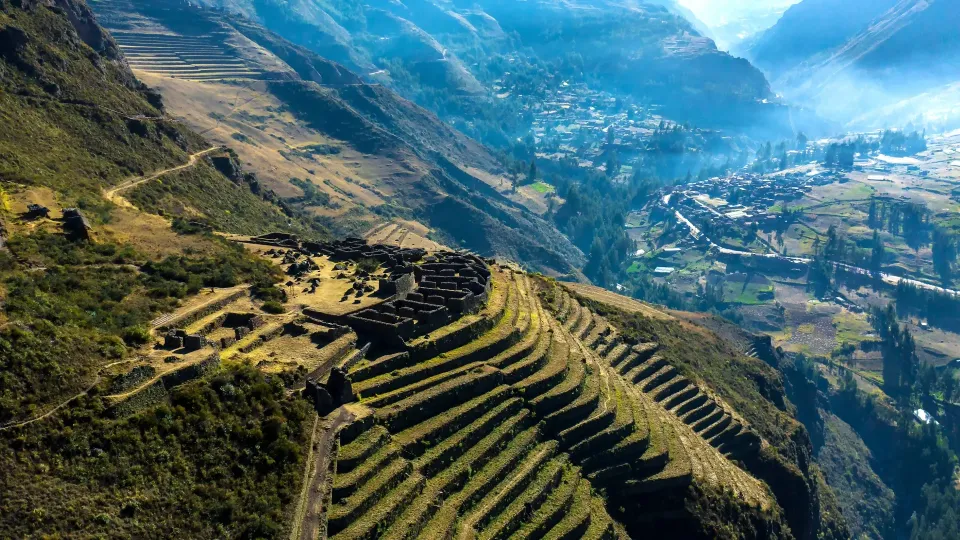
Day Tours from Cusco
Sacred Valley Tour from Cusco: Pisac & Ollantaytambo
The Full Day Sacred Valley Tour unfolds like a journey through the cultural heart of the Andes. From the…
- Moderate
- 3,762 m
- Group or private
From US$110per person
Book a tripDay Tours from Cusco
Maras, Moray & Chinchero Tour from Cusco (Full Day)
The Maras and Moray tour from Cusco is the perfect full-day experience for travelers who want to explore…
- Easy
- 3,762 m
- Group or private
From US$130per person
Book a trip Destinations