
Machu Picchu History: Who Built It, Why It Was Abandoned and Who Found It
Who built Machu Picchu, what it was for, why it was abandoned and who really discovered it, from Pachacuti to Agustín Lizárraga and Hiram Bingham.
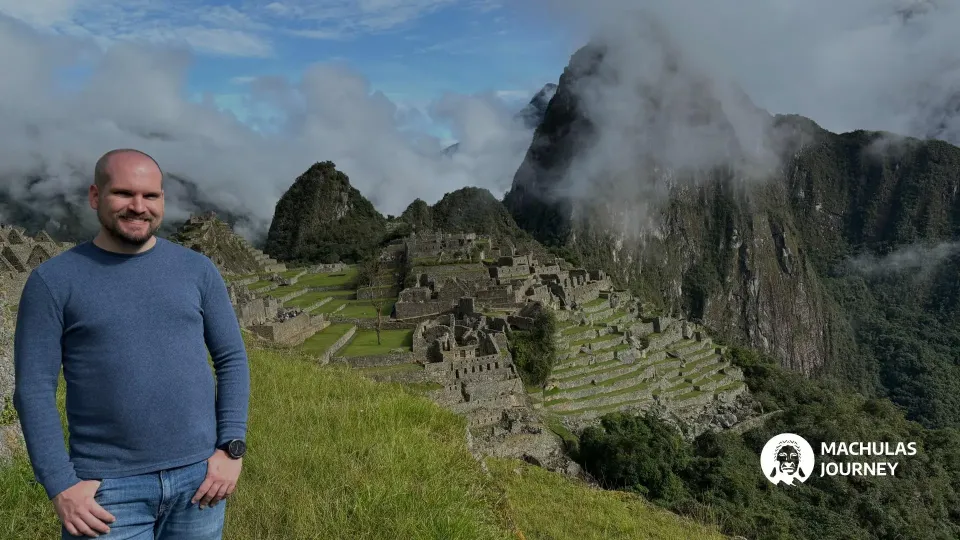
Stand at the upper terraces at 6:30 in the morning, when the clouds are still peeling off Huayna Picchu, and the first question most people ask our guides is not about the view. It is "Who built this, and why up here?" Machu Picchu history is a story with a royal founder, a mysterious ending, a famous American explorer and a Cusco farmer who got there nine years before him. Here is how it fits together, based on what archaeologists and historians can actually document.
Who built Machu Picchu, and when?
Machu Picchu sits at about 2,430 m (roughly 7,970 ft) on a ridge above the Urubamba River. Archaeologists broadly agree that it was built in the fifteenth century on the orders of Pachacuti, the Inca ruler who turned Cusco from a regional kingdom into the capital of an empire. You can read more about that expansion in our guide to the https://machulasjourney.com/blog/.
For decades the textbook date for construction was around 1450, based on historian John Rowe's reconstruction of Pachacuti's reign from Spanish chronicles. In 2021, a study led by Yale archaeologist Richard Burger and published in the journal Antiquity used accelerator mass spectrometry to date human remains of 26 individuals excavated from four cemeteries during Yale's 1912 expedition. The results showed the site was occupied from around 1420, at least two decades earlier than the traditional chronology.
What was Machu Picchu used for?
The best-supported answer is that it was a royal estate, a country palace for Pachacuti and his lineage, comparable in spirit to a presidential retreat. It was not a fortress city in the usual sense, and it was not a "lost city" to the people who lived in the valley.
- Size: UNESCO describes around 200 structures, divided into an upper residential and ceremonial sector and a lower agricultural sector of stone terraces, with a large plaza in between.
- Population: estimates suggest about 750 people lived there while it functioned as an estate, most of them retainers and craftspeople serving the royal household, with numbers dropping to a few hundred off-season.
- Religion and astronomy: buildings like the Temple of the Sun and the Intihuatana are tied to solar observation, which matters in an agricultural society.
One of our guides, who has led groups through the site for years, likes to stop at the quarry inside the citadel and ask guests to find a block that was never moved. Somebody always finds it. It is a good reminder that this place was a construction site as well as a palace, and that it may never have been fully "finished."
What was its original name?
Here is a detail most visitors never hear. In a study published in the journal Ñawpa Pacha, historian Donato Amado Gonzales of Peru's Ministry of Culture and archaeologist Brian Bauer of the University of Illinois Chicago argued that the Inca probably called the site Huayna Picchu, or simply Picchu. Their evidence includes late sixteenth-century Spanish accounts and a 1904 atlas listing ruins called Huayna Picchu. "Machu Picchu", the name of the larger mountain next to the ruins, appears to have stuck thanks to Hiram Bingham's publications after 1911.
Why was Machu Picchu abandoned?
No single document explains it. The site was most likely left around the time of the Spanish conquest in the 1530s. When the royal system that funded and staffed the estate collapsed, there was little reason to keep people on a remote mountain ridge. Epidemic disease also played a role; smallpox may have reached the Andes before the Spanish themselves did. Because it was isolated and quickly reclaimed by forest, Machu Picchu avoided the fate of Cusco, where colonial churches were built directly on top of Inca temples.
Who discovered Machu Picchu?
This is the most misunderstood chapter of Machu Picchu history: the site was never fully lost. Families farmed its terraces, and Cusco locals knew of ruins on the ridge. The "discovery" story has three key moments.
1902: Agustín Lizárraga
Agustín Lizárraga, a farmer and land tenant from Cusco, reached the site on July 14, 1902, with three companions. He left a charcoal inscription with his name and the date on the Temple of the Three Windows. Bingham himself photographed the area, and Machu Picchu's former park director has said the photograph confirms the inscription. It was later erased.
1911: Hiram Bingham
On July 24, 1911, Yale lecturer Hiram Bingham, who was searching for Vilcabamba, the last Inca refuge, climbed to the ruins. Melchor Arteaga, a local farmer, guided him up from the valley with a Peruvian police sergeant named Carrasco. At the top, a boy from one of the two families living there, the Recharte and the Álvarez, led him through the overgrown buildings. Those families were drinking water from a working Inca canal.
1912 to 1915: excavation and fame
Bingham returned with Yale and National Geographic support, cleared the vegetation and excavated burials. National Geographic published the story in 1913, and the world started paying attention.
The Yale artifacts and the road to UNESCO
Thousands of objects excavated in those years were shipped to Yale. After a long dispute, Yale began returning them to Peru in March 2011, and the final shipment arrived in Cusco in late 2012. Many are now displayed at the Casa Concha museum in Cusco, a short walk from the Plaza de Armas. If you have an afternoon free, it is worth an hour.
In 1983 UNESCO inscribed the Historic Sanctuary of Machu Picchu as a mixed World Heritage site, recognized for both its cultural and natural value. In 2007 it was voted one of the New Seven Wonders of the World, which accelerated the visitor numbers that shape today's timed tickets and circuits.
Machu Picchu history timeline
| Year | Event |
|---|---|
| c. 1420 | Earliest occupation according to 2021 radiocarbon dating |
| 15th century | Built as a royal estate for Pachacuti |
| 1530s | Abandoned around the Spanish conquest |
| 1902 | Agustín Lizárraga leaves his inscription |
| 1911 | Hiram Bingham reaches the site on July 24 |
| 1913 | National Geographic publishes the story |
| 1983 | UNESCO World Heritage inscription |
| 2011 to 2012 | Yale returns excavated artifacts to Cusco |
How to see Machu Picchu's history with your own eyes
Machu Picchu history makes more sense on the ground. On the Classic Inca Trail you walk the old royal road and arrive through the Sun Gate, the way Inca travelers did. If time is short, our Machu Picchu full day tour from Cusco covers the citadel with a licensed guide. For context first, the 3-day Cusco, Sacred Valley and Machu Picchu tour starts at Qoricancha and Sacsayhuamán before the train. Planning logistics? Our https://machulasjourney.com/blog/machu-picchu-travel-guide/ and the explainer on https://machulasjourney.com/blog/machu-picchu-circuits-explained/ tell you which ticket shows you which buildings.
FAQ
How old is Machu Picchu?
Radiocarbon dating published in 2021 shows occupation from around 1420, which makes it roughly 600 years old.
Did the Spanish find Machu Picchu?
Spanish colonial documents mention the area and the name Picchu, but there is no record of the conquistadors sacking it the way they did Cusco.
Who really discovered Machu Picchu?
Local families already lived there, and Agustín Lizárraga visited in 1902. Hiram Bingham made it internationally famous after 1911.
Why is it called Machu Picchu?
Machu Picchu means "old peak" in Quechua and is the name of the mountain beside the ruins. Researchers think the Inca may have called the site Huayna Picchu or Picchu.
If you want a guide who can tell this story standing in the right spots, write to us via https://machulasjourney.com/contact-us/ or WhatsApp and we will help you choose the best way in.
Sources
- UNESCO World Heritage Centre — Historic Sanctuary of Machu Picchu
- Yale Department of Anthropology — Dr. Richard Burger's study demonstrates Machu Picchu older than believed
- University of Illinois Chicago via Newswise — Study reconsiders name of Peru's Machu Picchu
- Andina — July 24, 1911: the day the world learned of Machu Picchu
- Andina — Fotografía de Hiram Bingham evidencia escrito de Agustín Lizárraga
- The World (PRI) — Machu Picchu artifacts returned from Yale to Peru

Local guides and travel planners based in Cusco. We walk these routes every season.
About UsTours for this trip
Machu Picchu Tours
Machu Picchu Full Day Tour from Cusco
A Full Day Machu Picchu Trip is one of those journeys that stays with you long after it ends. From the…
- Easy
- 3,400 msnm
- Group or private
From US$360per person
Book a trip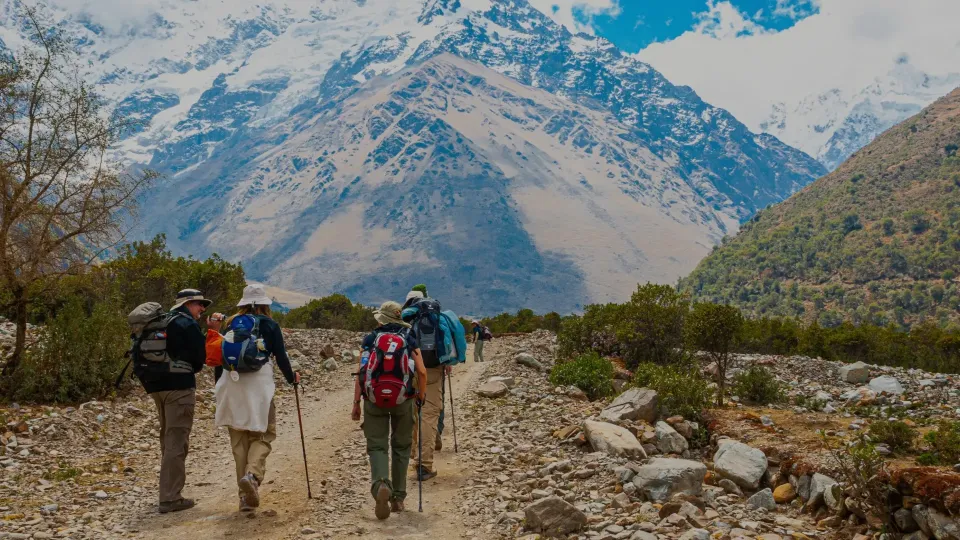
Inca Trail to Machu Picchu
Classic Inca Trail to Machu Picchu 5 Days / 4 Nights
The Inca Trail is the undisputed attraction for most people coming to Cusco and it is by far the most…
- Moderate
- 3,750 msnm
- Group or private
From US$1,050per person
Book a trip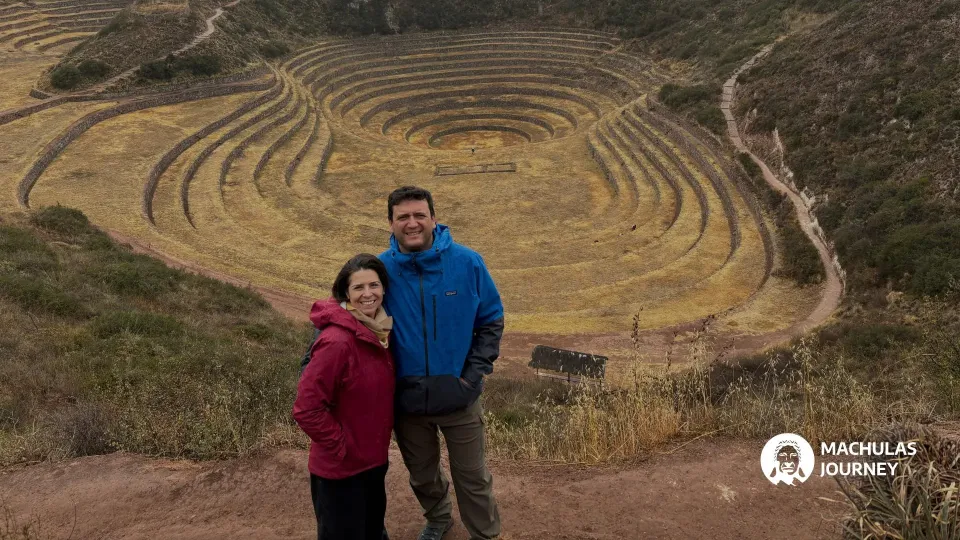
Machu Picchu Tours
Cusco City Tour, Sacred Valley & Machu Picchu 3 Days
The Sacred Valley and Machu Picchu 3 Day Tour is the perfect short escape into the heart of the Inca…
- Moderate
- 4,650 msnm
- Group or private
From US$520per person
Book a trip Trekking Guides
 Travel Planning